How to forcefully kill a process in Windows and Linux
You have an operating system process which is stuck in your Windows or Linux machine and it cannot be stopped from the Windows Task Manager or other Linux GUI tool. This article provides instructions on how to forcefully kill a process in Windows and Linux.
Solution
Section titled “Solution”First obtain the process ID from either the Windows Task Manager or by running the Powershell command
get-process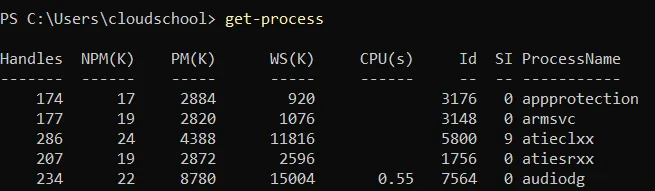
Then use the above process ID (PID) in the following command, either in Windows CMD or Powershell
taskkill /f /pid [PID]
To forcefully kill an operating system process in Linux, run the following commands.
#Find the appname Process ID (PID)pidof appname#Use the PID in the below commandkill -9 pid4. TRACE-AI Execution Workflow
Section titled “4. TRACE-AI Execution Workflow”- Triage: Review monitoring dashboards or error metrics for initial anomaly spikes or timeout signatures.
- Record Evidence: Export service diagnostic logs, event viewers, or failure traces.
- Analyze: Correlate error signatures against known infrastructure or configuration limits.
- Correlate: Match active incident timeline against recent deployments or scale events.
- Execute & Verify: Apply corrective remediation steps and verify telemetry baseline recovery.
5. Vendor Documentation & Validation Guardrails
Section titled “5. Vendor Documentation & Validation Guardrails”- Authority Reference: Cross-reference configuration changes against official vendor documentation.
- Validation Gate: Require staging environment testing and Human-in-the-Loop SME approval before production changes.